

The implant list is full, the nurse has prepared the surgery and the clinician asks for the grafting material. Then someone realises the practice has only one usable syringe left. The replacement order is due tomorrow, but two grafting cases are booked for this afternoon.
This is a common problem when a practice changes to a new dental bone regeneration material. The clinical decision may be clear, but the first order is often less organised. A sensible starter pack can help the team test the product, train with it and build a reliable stock system without buying too much too soon.
What should a starter pack include?
A starter order should match your expected use, not simply the largest discount available.
For many practices, a practical starting point is:
- One small pack for the first few planned cases.
- A second pack for training and early stock cover.
- The manufacturer’s instructions for use.
- Batch and expiry details.
- Storage information.
- Product and regulatory documents.
- A written delivery and reorder contact.
The exact quantity depends on your surgical list. A practice completing two grafting cases a month will need a different starting order from one completing 15.
Before ordering, review the next four to six weeks of implant bookings. Mark the cases where grafting may be needed. Then add a small reserve rather than ordering only the exact number of planned syringes.
For example, if four cases may require grafting, ordering five or six units gives the practice some cover for a change in treatment plan or a damaged pack.
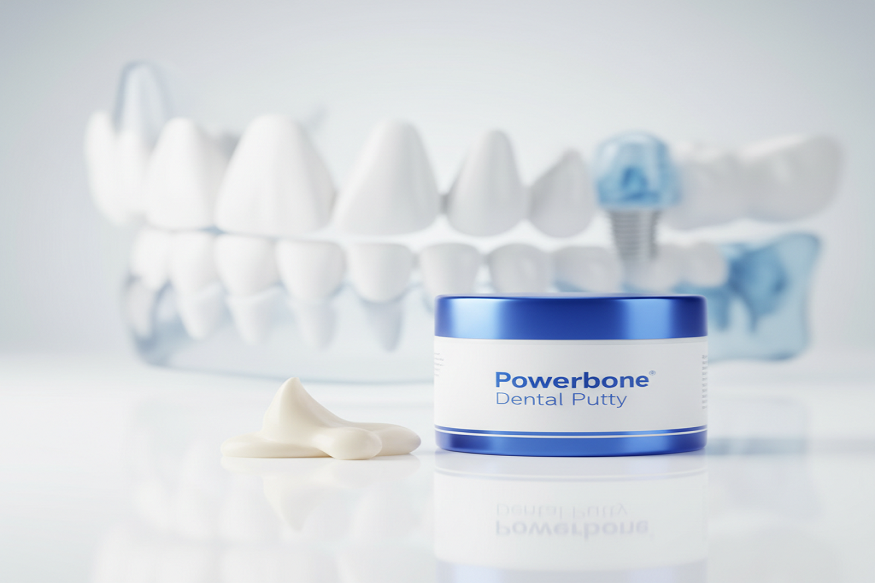
Powerbone Dental Putty starter pack planning
When switching to Powerbone Dental Putty, start with cases that allow the clinical team to become familiar with its handling.
This might include routine socket preservation, selected peri-implant defects or other suitable cases already treated by the clinician. The clinician should choose the indication and confirm that the material is appropriate for each patient.
Powerbone Dental Putty is supplied ready to use in a syringe. Restore Surgical describes it as mouldable, form-stable and suitable for a membrane-free protocol in appropriate cases. It contains silicate-substituted beta-tricalcium phosphate and is designed to fully resorb.
The first order should give the team enough product to learn the workflow properly. One isolated syringe may not be enough. If the first case is unusual, staff may judge the product before they have had a fair chance to use it in a routine procedure.
Read More: 7 Factors to Consider When Choosing a Dentist
A small, planned run of cases is more useful. Ask the clinician to note how easily the material is delivered, shaped and retained in the defect. Ask the dental nurse to record how long it takes to prepare the surgical field and clear the used packaging.
Check the whole kit, not just the graft
Changing graft material can affect more than the graft itself.
Before the first case, check whether the practice has:
- The correct syringe or applicator.
- Suitable sterile instruments for placement.
- A clean area for opening the pack.
- The correct storage space.
- A simple way to record the batch number.
- A place to keep the instructions for use.
- A plan for unused opened material.
Do not assume that a new product fits neatly into the old surgical tray. It may need a different instrument for shaping or a different approach to delivery.
A ten-minute dry run can prevent avoidable delays. Open the outer packaging, identify the product information, locate the batch number and practise passing the syringe safely. This is especially useful when several nurses support the implant team.
How much should you order first?
There is no single starter quantity for every UK practice. A simple way to plan is to use three figures:
- The number of likely cases in the next month.
- The average number of units used per case.
- The supplier’s normal delivery time.
If a practice expects six cases and usually uses one unit per case, six units cover the list. Add one or two units if delivery takes several working days or the practice cannot risk postponing surgery.
Do not buy a year’s supply during the first order. First confirm that the product suits the clinicians’ technique, that the team understands the handling process and that the shelf life is long enough for the practice’s use.
Once the first month is complete, compare planned use with actual use. If three of six units were used, do not automatically reorder six. Look at the next surgical list, current stock and delivery time.
The starter pack should include evidence
A product demonstration is helpful, but it should not replace proper product information.
Ask the supplier for the current:
- Instructions for use.
- Product specification.
- Declaration of conformity, where applicable.
- Storage and transport requirements.
- Shelf-life information.
- Batch traceability details.
- Instructions for reporting a product issue.
Keep these documents in the practice’s purchasing or clinical governance folder. Make sure the team knows where they are stored.
This is one of the easiest steps to miss when a product is ordered by one person and used by another. The practice manager may place the order, while the dental nurse later needs the batch details during stock checks.
Ask this marking question before ordering
Since Brexit, many practices ask whether a product is “CE marked” or “UKCA marked”. The question is important, but the answer is not always as simple as suppliers make it sound.
Ask the supplier this specific question:
Which marking does this product carry for the UK market — UKCA, CE under the current recognised arrangements, or both — and can you provide the supporting documents?
UKCA is the UK conformity marking route for medical devices placed on the Great Britain market. However, valid CE-marked medical devices may still be accepted in Great Britain for defined periods, depending on the device and the legislation used for certification. The MHRA states that the current arrangements vary by device type and certification route.
This is not only a supplier issue. It affects the practice’s own purchasing records and compliance checks. Do not rely on a product page that simply says “compliant”. Ask for the exact marking and supporting paperwork before placing a larger order.
Practices should confirm the current requirements directly with the MHRA. This article is not legal or regulatory advice, and requirements may change.
Compare Powerbone with EthOss fairly
EthOss is an alternative that some clinicians may already know. If your practice is switching from EthOss, ask the clinical team to compare both products based on the full workflow, not just the name on the box.
Review:
- Whether the material is ready to use.
- Whether mixing is required.
- How stable it feels during placement.
- Whether a membrane is needed for the intended case.
- How much material is used per procedure.
- How easy it is to record and trace each unit.
- How quickly replacement stock can be obtained.
- Evidence base — EthOss is supported by dental studies, while Powerbone Dental Putty is supported by both dental and orthopaedic studies.
Powerbone Dental Putty is supplied ready to use, with no mixing required, and is designed to be moulded directly to the defect. Restore Surgical also describes its syringe as ergonomic and its formulation as resistant to wash-away compared with calcium sulphate carrier materials.
The practical benefit is a shorter, more consistent setup for suitable cases. There is no need to add a liquid, mix a powder or work within a setting window. That can be useful when the team is moving between several surgical appointments.
Read More: Tennessee Men’s Clinic Explains the Interplay Between Men’s Health and Social Connection
The clinician must still decide which product is right for each patient. A starter pack is a way to assess the product properly, not a substitute for clinical judgement.
Build a simple reorder rule
After the first few cases, set a reorder point.
For example, if the practice uses eight units a month and delivery normally takes five working days, the manager might reorder when stock falls below five units. The number should reflect actual use, upcoming cases and the supplier’s normal availability.
Record three details after every case:
- Product name and batch number.
- Quantity used.
- Remaining stock.
This takes very little time and makes the next order more accurate. It also helps identify unusual waste, short deliveries or a sudden rise in demand.
Avoid keeping all stock in one open box if several clinicians use it. A labelled storage area and a first-expiry, first-out system can reduce the chance of short-dated units being overlooked.
Questions practices ask about switching
What should a UK dental practice order first when trying a synthetic bone graft?
Order enough for several suitable cases, plus a small reserve. Include the product instructions, storage information, batch records and regulatory documents. The right quantity depends on monthly use and delivery time.
Is Powerbone Dental Putty supplied ready to use?
Restore Surgical states that Powerbone Dental Putty is supplied in a syringe and can be used without mixing. It is mouldable and form-stable for suitable indications. The treating clinician should follow the current instructions for use.
Is Powerbone Dental Putty the same as EthOss?
No. They are alternative synthetic graft materials. Practices should compare handling, preparation, stability, clinical preference, documentation, shelf life and supply before choosing one.
Should I ask about UKCA or CE marking before buying?
Yes. Ask the supplier which marking the product carries for the UK market and request the supporting documents. Current Great Britain arrangements can recognise certain CE-marked devices for defined periods, so confirm the position with the MHRA rather than relying on an assumption.
For practices moving away from EthOss, Powerbone Dental Putty is a practical option because it is ready to use, mouldable, form-stable and designed for a membrane-free approach in suitable cases. It is also easily available from the Restore Surgical website, making it straightforward to order a starter pack and plan future stock.
If you are deciding how much to order for your first cases, Restore Surgical can help you check the available Powerbone pack options for your practice.